Arriving in France in 2004 from the deep forests of Southeast Asia via the international trade of used tyres, the tiger mosquito has now fully colonised the country.
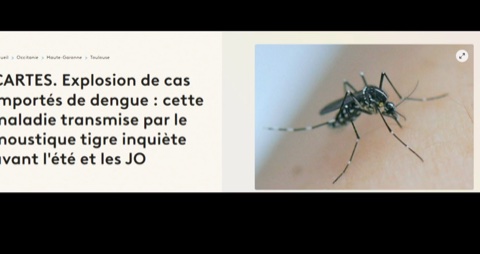
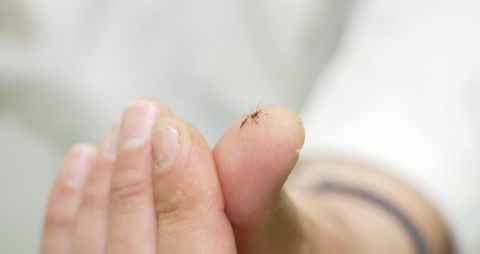
This tiny 5-millimetre insect, easily recognisable by its black and white stripes, is now established in 78 French departments in 2024—seven more than in 2023.
Active from May to November, its massive spread is increasingly alarming. Not only is it aggressive and capable of ruining picnics, barbecues and outdoor gatherings, it can also transmit potentially serious diseases such as dengue fever (causing fever, pain, and in severe cases haemorrhagic shock), chikungunya, and the Zika virus (with a risk of severe birth defects such as microcephaly). In 2023, France recorded 2,019 cases of dengue. Since January 2024, 200 new cases have already been reported in the Occitanie region alone.
Faced with this threat, local authorities are mobilising.
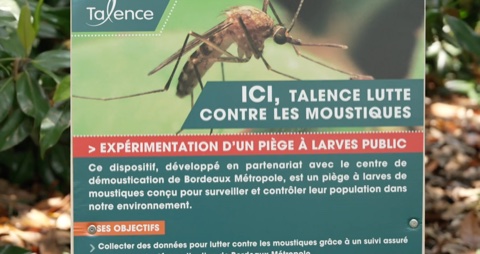
In Talence, near Bordeaux, a “zero mosquito plan” has been launched. The mayor has even developed DIY traps costing nothing, aimed at helping the most vulnerable residents avoid being exploited by what he calls the “mosquito trap business.” The city is also encouraging the return of natural predators such as bats—nicknamed “Batman”—which feed on mosquitoes, as well as swallows, by installing nesting boxes across the city, as they are among the biggest daytime mosquito hunters.
Meanwhile, the AID Méditerranée, a mosquito control organisation along the Mediterranean coast, is developing laboratory breeding programmes for tiger mosquitoes, as well as new methods to combat them. We were granted access to discover this scientific “war” taking place in labs.
But the fight is also happening in private gardens and even cemeteries, which have become major breeding grounds for mosquito larvae. Teams from the Talence city council regularly visit residents in a new “mosquito-free district” under development. The goal: as last year, to prevent the birth of up to one million mosquitoes by teaching residents how to eliminate breeding sites.
In Auch, in the Gers region, mosquito bites have already started, as experienced by Yvan and his family. But here, the conflict also involves a social housing authority that built 22 housing units, inadvertently creating a ditch that “retains rainwater and mosquitoes for eight months of the year.” Neighbours, forced to stay indoors all summer, are outraged, while the housing authority remains unresponsive.
Yet only collective action can contain this threat. The fight will be shared—or lost, warns Dr Ouedraogo from the Infectious, Tropical and Parasitic Diseases Department at the Pitié-Salpêtrière Hospital, who is seeing more and more dengue cases in his clinic.