Off the coast of Mayotte, a cave submerged for over 20,000 years holds 100,000 years of climate secrets. For the first time, a team of divers and scientists dared to venture inside.
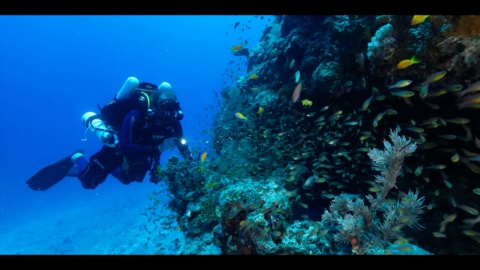
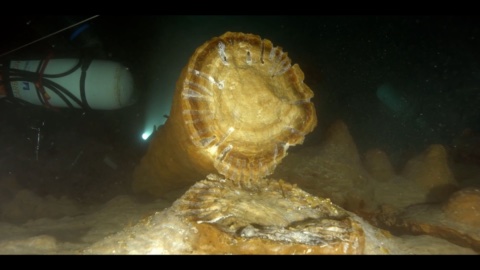
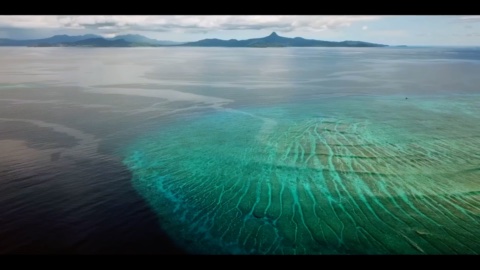
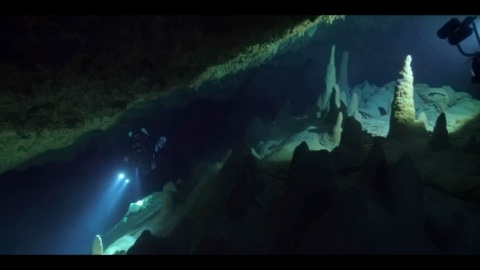
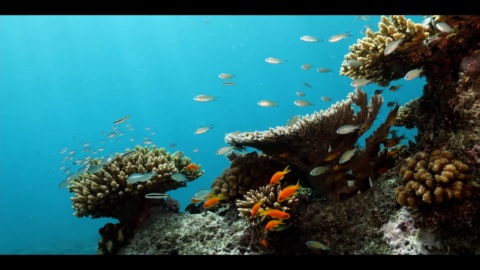
Seventy-five metres beneath the surface of Mayotte's lagoon, concealed within the depths of the coral reef, lies an opening discovered only a few years ago, one that had never before been explored. Beyond it stands a cave born at the Earth's surface before being swallowed by rising waters more than 20,000 years ago. Its towering stalactites and stalagmites hold within their rock the memory of 100,000 years of climate history.
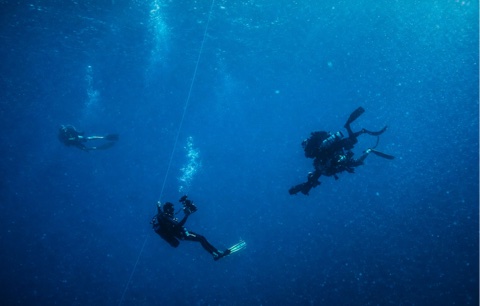
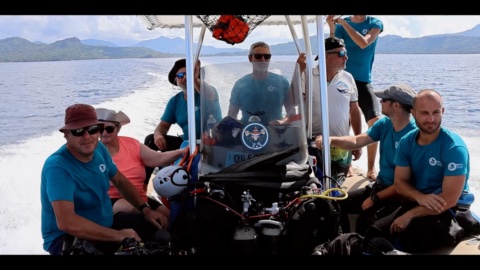
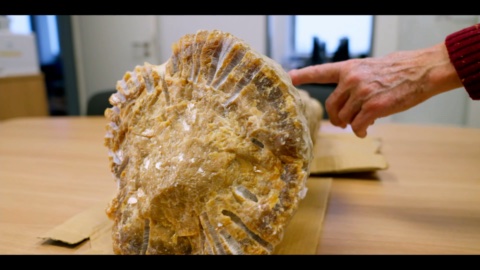
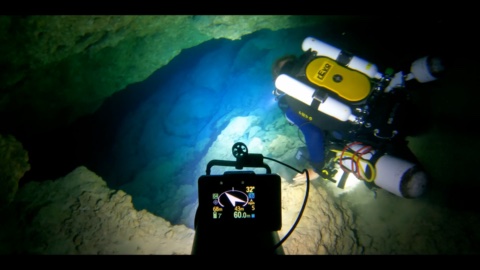
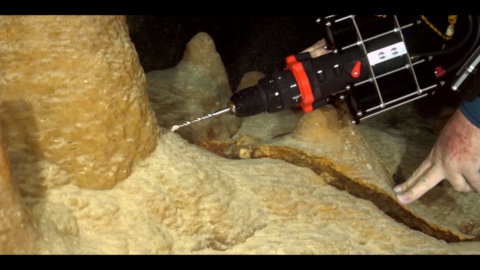
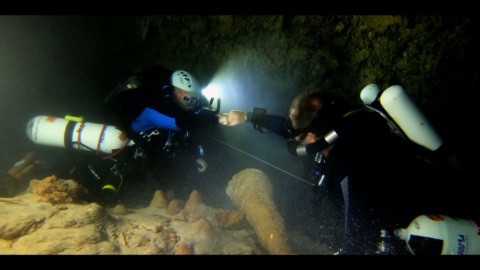
In 2023, six of the world's leading deep cave divers, brought together by the Deep Blue Exploration association, assembled in Mayotte alongside scientists from around the globe. Their mission was daunting: penetrate 130 metres into a submerged cave passage, drill out the base of a giant stalagmite measuring 80 centimetres in diameter and weighing nearly 60 kilograms, then bring it safely and intact back to the surface.
Each dive lasted between three and four hours, with only thirty minutes spent at the bottom of the cave. The remainder was devoted to the descent and lengthy decompression stops. The threat of cave collapse was ever-present, and the slightest mistake could have jeopardized the entire mission.
Against the odds, the operation succeeded. The stalagmite was entrusted to Professor Bernard-Armand Thomassin, who transported it to the Max Planck Institute in Germany, where it was cut lengthwise like the trunk of an ancient tree. Initial dating revealed a tip approximately 15,000 years old and a base dating back 25,000 years. Thanks to uranium-thorium dating techniques, the samples could be dated with an accuracy of around 60 years. In 2025, the first scientific paper based on these findings was published. Future isotopic analyses—particularly of the carbon trapped in the cave's atmosphere during that period—promise to provide valuable new insights into the climate system and help shed light on today's climate change.
In January 2024, the team returned to the cave for an even greater challenge: producing a complete 3D model of the submerged passage using photogrammetry, a technique never before deployed at such depths. A custom-built rig of twelve cameras mounted in a hemispherical array on an underwater scooter captured more than 500,000 images, which were later processed by a high-performance supercomputer at the French National Research Institute for Sustainable Development (IRD) on Réunion Island.
This film tells the extraordinary human and scientific story of these two groundbreaking expeditions—an epic worthy of Jules Verne—driven by the determination of men and women who push the limits of exploration to unlock the secrets of our past and help illuminate our climate future.