Too young to be mothers, or forced by their families to give up their child, some women give birth “under X” (anonymous birth), an act that leaves a lasting impact on their lives.
Born under X, these children are adopted. Years later, they begin a search for their origins, hoping to one day find the mother who disappeared into the shadows.
How can someone rebuild themselves after such an event? How do you live with this ever-present absence? Where do you search? Who are you searching for? And how?
These are the questions faced by children born under X and by mothers trying to step out of the shadows.
In France, there are between 500 and 700 births under X each year. This unique legal system allows a woman to give birth in any public or private maternity ward without revealing her identity, or with the guarantee that it will never be disclosed without her consent. Today, more and more associations of “born under X” children are calling for access to their origins.
Where is she? Who is she? Being born under X is often a deep source of suffering for children. But mothers are not spared either, carrying the weight of guilt and loss.
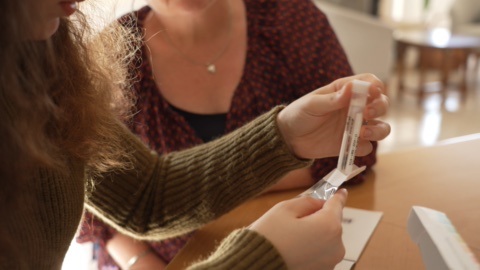
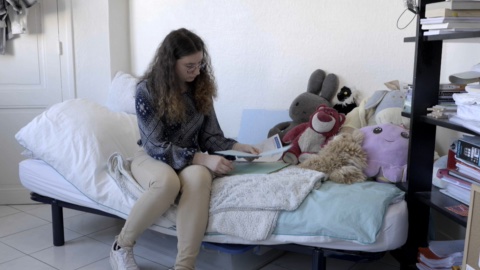
Pauline, now 33, has spent her life wondering where she comes from, imagining countless faces for the woman who gave birth to her in Angers. That day, her mother could have left a sealed letter—but instead chose to disappear without a trace. For two years, Pauline has been relentlessly searching for her mother, driven by a vital need to understand her own identity and lineage.
Jeanne is 42. Twenty-six years ago, she gave birth to a baby boy she has never known. She was just 16 at the time, living with her parents who left her little choice but to give birth anonymously. 24 hours after delivery, she entrusted her son to child welfare services for adoption. After a birth under X, all traces disappear. She never saw him again.
Today, she still remembers: “He weighed 3.280 kg and was 51 cm long.” Supported by her other children, who often speak of the older brother they never knew, she now searches for him online, leaving messages on social networks.
Two months ago, she requested the lifting of her anonymity through the National Council for Access to Personal Origins (CNAOP). “I’ve requested the lifting of my identity secrecy. I’m waiting for the day he decides to find me. I will be there to explain everything—to tell him I never abandoned him in my heart.”
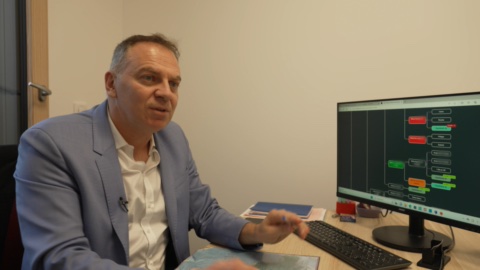
Created by the law of January 22, 2002, the CNAOP was unanimously adopted by the French Parliament. It preserves information related to the identity of birth parents and helps adopted or state wards who do not know their origins in their search.
Since 2002, the CNAOP has handled 11,496 cases, of which 10,572 have been closed. It has been able to disclose the identity of birth parents in 3,360 cases, while in 1,210 cases, parents contacted refused to lift anonymity. Voluntary identity disclosures remain rare (55 in 2020), with 1,054 since the creation of the CNAOP.