Three women — a molecular scientist in Germany, a historical perfumer in Paris, and an
olfactory heritage curator in Amsterdam — are racing to return to the world a smell that has been missing for 3,500 years: the sacred balm ancient Egyptians believed would make the royal dead smell like gods for all eternity. The Scent of Eternity follows their parallel journeys from laboratory to atelier to museum, and asks what it means to resurrect something the human senses have never forgotten – because they never knew it was gone.
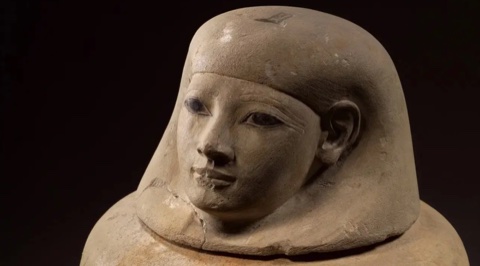
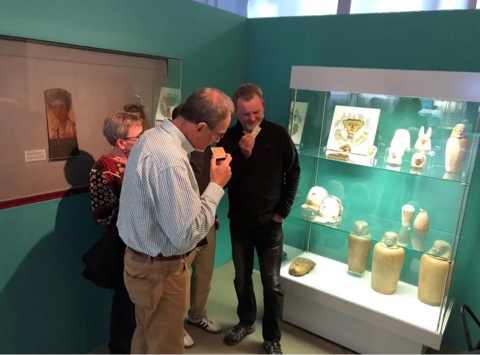
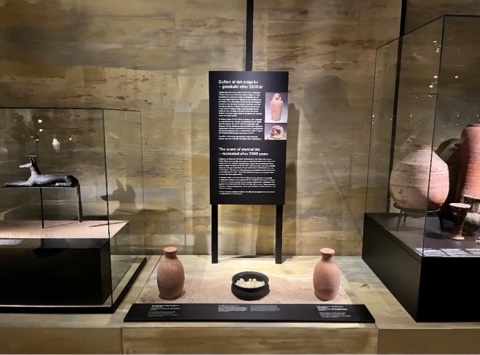
It begins with two alabaster jars. The canopic jars of Senetnay — royal wet nurse of the pharaoh Thutmose III, New Kingdom Egypt, circa 1450 BC — have sat in the collection of the Museum August Kestner in Hannover for over a century. They are beautiful objects: their lids carved into the heads of the funerary deities who guard the organs of the dead, their surfaces worn smooth by three and a half millennia of time. What no one knew, until very recently, is that they still contained a secret. Sealed inside the residue coating their inner walls — invisible tothe eye, detectable only by a mass spectrometer — was the molecular fingerprint of the balm that had been applied to Senetnay’s body at the moment of her mummification. A scent. Intact. Waiting.
Dr. Barbara Huber is a biomolecular archaeologist at the Max Planck Institute of
Geoanthropology in Jena, Germany. In 2024, she published the world’s first successful
reconstruction of an ancient Egyptian mummification balm — a multi-layered, extraordinarily complex blend of beeswax, plant oils, tree resins, and aromatic compounds sourced from trade networks stretching from the Mediterranean to tropical Asia. The paper caused an international sensation. But it left a question unanswered: what did it actually smell like? Data is not a scent. A spectrometry readout is not something you can breathe.
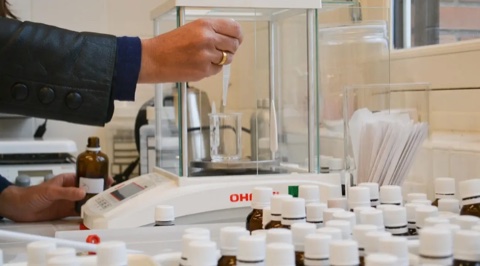
Carole Calvez runs Iris & Morphée in Paris — one of the few ateliers in the world specialising in historical perfumery: the recovery and reconstruction of scents from pre-industrial periods using period-accurate materials and techniques. When Dr. Huber’s paper reached her, she immediately understood what it represented: a recipe. Incomplete, requiring interpretation, demanding an act of creative and scientific imagination — but a recipe nonetheless. The two women begin a collaboration across disciplines and countries, a sustained argument between data and instinct, between the laboratory and the nose.
Sofia Collette Ehrich works at the intersection of olfactory science and cultural heritage. As The Olfactory Contractor and a central figure in the Odeuropa Consortium — the European research network dedicated to recovering and preserving the scent heritage of the past — she has spent her career asking a question the museum world has largely ignored: what did history smell like? When Ehrich encounters the reconstructed Senetnay balm, she immediately begins to think about what happens when it meets a living person for the first time. Where should this encounter happen? How do you design a space for something this intimate, this ancient, this irreversible?
The film moves between three worlds, three registers, three kinds of knowing.
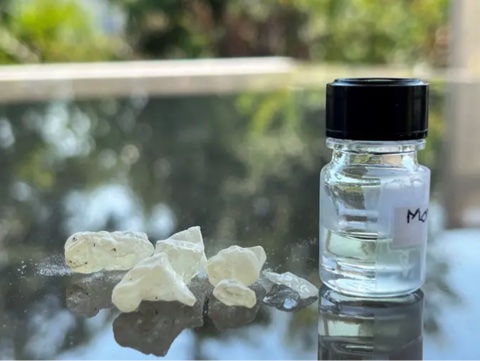
The film’s climax is the moment every broadcaster will ask about and every audience will remember. Dr. Barbara Huber travels to Paris. In Carole Calvez’s atelier, the two women meet for the first time face to face. Calvez presents the completed reconstruction — a small bottle of material that has required months of work, dozens of iterations, and the combined resources of two disciplines. Huber opens it. She is the first living person to encounter the smell of Senetnay’s mummification balm since the New Kingdom. The camera holds on her face. What happens in that moment — what it means for a scientist whose entire relationship with this material has been mediated by data and instruments to encounter it directly, sensorially,without any intermediary — is the scene at the heart of this film.
The Scent of Eternity is a film about what knowledge feels like when it becomes experience. It asks, through three extraordinary women and one ancient smell, what we mean when we say we have recovered the past — and what it means for the past to reach back and touch us.