
Classical music
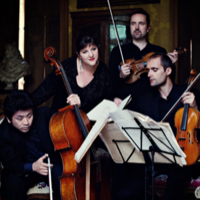
The Cambini Quartet
A passion for period instruments unites these 4 young musicians, which they share with the best groups: the Orchestre des Champs-Élysées, the Talens Lyriques and the Cercle de l’Harmonie. A passion for research and for the magnificent unrecognized scores that they defend with great zeal. And a passi...
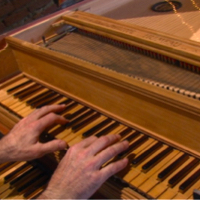
The little pleasures of Seicento
The beginning of the 17th century in Italy saw the emergence of many instrumental forms, testimony of the emancipation of instruments in relation to vocal music.
The Italian language illustrates this phenomenon in the terms cantata, sonata and canzone.
This programme enables us to discover the canzo...
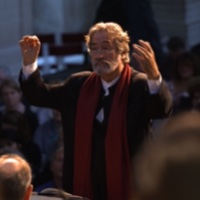
The night of the Kings: Royal festivities in the time of Louis XIII
Jordi Savall takes over the three prestigious rooms of the castle, to honor the three Kings who created the architecture of Versailles.
Louis XIII, who chose the site and built the first castle, was a musician and a good dancer in the Court Ballets. He favored the development of royal m...
The night of the Kings: Royal festivities in the time of Louis XIV
Jordi Savall takes over the three prestigious rooms of the castle, to honor the three Kings who created the architecture of Versailles.
Louis XIV established the Comedy-Ballet then the lyric tragedy and the academies. He gave an unequaled scope to sacred music and brought theater to the hear...
The night of the Kings: Royal festivities in the time of Louis XV
Jordi Savall takes over the three prestigious rooms of the castle, to honor the three Kings who created the architecture of Versailles.
With Louis XV it was the century of Voltaire and Rameau who became passionate about the Arts, and the King continued the tradition by being fond of par...
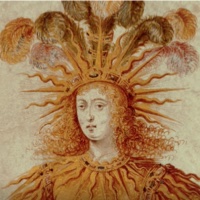
The ROYAL CONCERT OF THE NIGHT
Ensemble Correspondances, with Sébastien DAUCE (organ, harpsichord and direction), performs the Royal Concert of the Night, based on "Royal Ballet of the Nuict, danced by his Majesty on February 23, 1653", who lives for the first time Louis XIV appear as Sun King.
Concert recorded on November 30,...
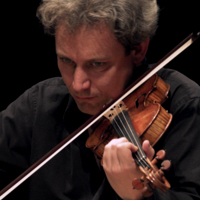
Arnold SchÖnberg, Chamber symphony N°2, Op. 38
The chamber symphony op.38 # 2 is an orchestral work written in 1939. Schönberg began its composing shortly after the first symphony, but finished it 33 years later. This partition is the witness of a musical turnaround in the late 30’s: the composer have successively explored tonal music and twelve...
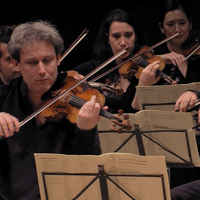
Brahms: symphony N ° 1 in C minor, op.68
Johannes Brahms composed his first symphony late in life, beginning it in 1862 and completing in 1876. Legend has it that his decision to tackle the genre was prompted by his finding a pen on Ludwig van Beethoven’s tomb in 1862. It represented the return to the great classical symphony, while fashio...
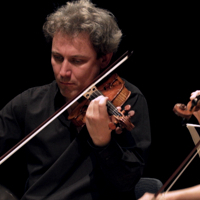
Brahms: Symphony N°3 in F-major Op. 90
Composed in 1883 in Wiesbaden, Symphony No.3 aroused a great deal of enthusiasm, especially from Hans Richter, who nicknamed it the Eroica. The work was inspired by Schumann, and angered Wagner fans when it was played for the first time. Scored for strings, woodwind, brass and percussion, the sympho...
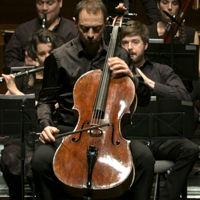
Chostakovitch, cello concerto n°1 in E flat major, Op. 107
Composed in a difficult period of Chostakovich's life who then suffers from poliomyelitis, this concerto is dedicated to Mstislav Rostropovich. The musical motif DSCH occurs clearly in this work. In the final Chostakovich used Stalin’s favorite Russian melody, “Suliko”, but deforming it in an ironic...