
History

5 DAYS THAT CHANGED PRINCESS DIANA
Thirty years after her tragic death, Princess Diana remains one of the most photographed, admired and influential women in modern history. But how did a shy young kindergarten assistant become a global icon whose legacy still resonates around the world?
5 Days That Changed Princess Diana retraces h...

THE SCENT OF ETERNITY
Three women — a molecular scientist in Germany, a historical perfumer in Paris, and an
olfactory heritage curator in Amsterdam — are racing to return to the world a smell that has been missing for 3,500 years: the sacred balm ancient Egyptians believed would make the royal dead smell like gods fo...
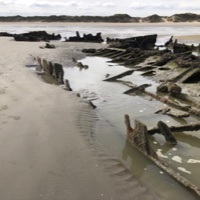
Dunkirk 1940: The Untold Story of Operation Dynamo
May 1940: 338,000 Allied soldiers are evacuated from Dunkirk in nine days. 86 years later, French, British and German archaeologists and historians investigate shipwrecks and archives to uncover the hidden story of Operation Dynamo and challenge the myth of the “Miracle of Dunkirk.”
At the end of...
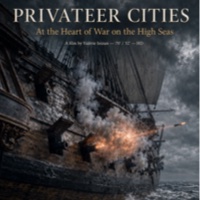
PIRATE CITIES, At the Heart of War on the High Seas
The spectacular saga of the privateers and the cities that made Europe’s greatest maritime powers tremble for more than three centuries.
From the 16th to the 19th century, France confronted Europe’s great maritime powers: the Spanish Crown, England and the Dutch Republic.
To tip the balance of...
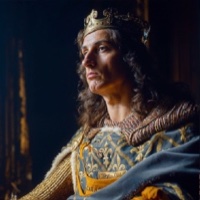
Ancient cities : the Builders of History
They Built Cities to Assert Their Power. A thousand years later, their walls still speak. This is the story of the builders of the medieval world.
Step into the heart of the Middle Ages, where stone ruled, cities embodied power, and builders became legends. This documentary series brings myt...
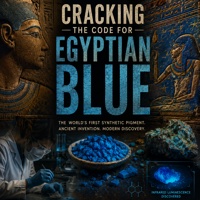
Cracking the Code for Egyptian Blue
The ancient Egyptians lived in a world of color, and blue was the hardest color to get. Blue stones were rare and difficult to import, so they invented the world's first synthetic pigment: Egyptian blue.
It spread across empires, including Rome and Pompeii, then vanished for more than t...
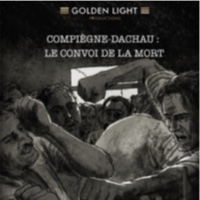
Compiègne–Dachau: The Death Convoy
On July 2, 1944, at 9:15 a.m., the whistle of the stationmaster at Compiègne signals the departure of one of the most sinister trains in the history of French deportation. Destination: Dachau.
Inside 22 cattle cars, 2,152 prisoners — most of them members of the Resistance — are crammed in by force ...
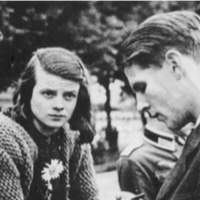
HANS & SOPHIE SCHOLL : the White Rose, Faith in Resistance
Not all Germans embraced the deadly ideology of the Third Reich.
Among those who chose to say “No,” Sophie Scholl remains perhaps the most iconic figure—because of her youth, her courage, her unwavering determination, and her extraordinary inner strength.
A member of the non-violent resistance...
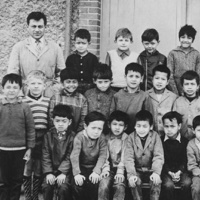
Repatriates from Indochina, recovered memories
Noyant-d’Allier, a small village in the Bourbonnais region, began receiving repatriates from Indochina in the mid-1950s. This massive influx profoundly changed the history of this rural commune. These repatriates recount their arrival, their life in Noyant-d’Allier, their struggle for recognition of...

THE POSTMAN OF NAGASAKI
On August 9th, 1945, a sixteen-year-old postman was delivering mail on his bicycle when the atomic bomb exploded over the city of Nagasaki. In his book “The Postman of Nagasaki” published in 1984, Peter Townsend, a former Royal Air Force fighter pilot, describes Sumiteru Taniguchi’s struggle to surv...